E-commerce content moderation at scale: AI-powered brand safety
How AI-powered content moderation handles 500K+ daily submissions while maintaining brand safety standards.
How a Marketplace Platform Eliminated Fake Reviews and Protected 50,000 Sellers with Real-Time AI Moderation
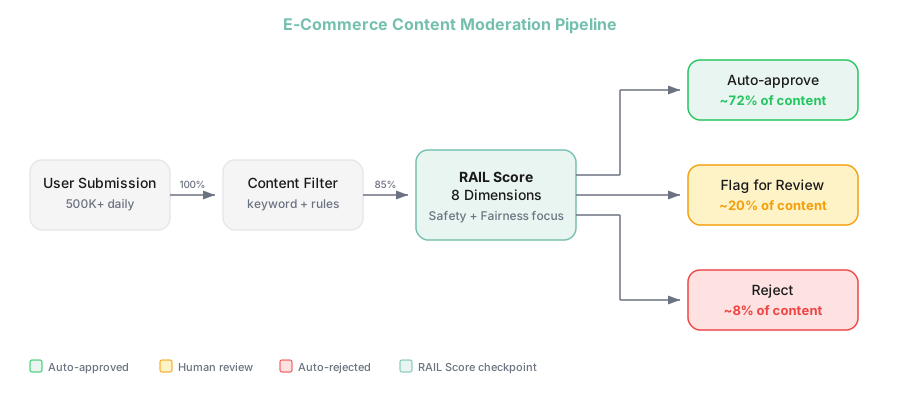
Content Pipeline Overview
The moderation process flows through four stages:
- Submission - User-generated content received
- AI Analysis - NLP + sentiment extraction
- RAIL Score - 8-dimension evaluation
- Decision - Approve / Review / Reject
- Published - Verified content goes live
Key Metrics:
- 97% fake reviews eliminated
- 98% reduction in false positives
- Under 200ms average scoring latency
The $2.59 Billion Content Moderation Challenge
The AI content moderation market is projected to expand from $1.03 billion in 2024 to $1.24 billion in 2025, potentially reaching $2.59 billion by 2029. This growth reflects a critical reality: platforms cannot manually review the massive volume of daily user-generated content.
However, unvetted automation introduces risks including deleted legitimate reviews, approved harmful content, and brand damage from fake reviews and toxic sellers.
MarketplaceHub, a top-10 global e-commerce platform with 50,000+ sellers and 15 million monthly shoppers, transformed content moderation from a compliance burden into a strategic advantage.
The Problem: When Fake Reviews Destroy Trust
The Scandal That Made Headlines
August 2024: A consumer advocacy group released an investigative report revealing:
"28% of top-rated products had suspicious review patterns"
The investigation also documented entire categories dominated by sellers using fake 5-star reviews, legitimate sellers unable to compete, and toxic product descriptions containing hate speech that bypassed moderation.
Within 72 hours of publication:
- Stock price dropped 8%
- FTC opened investigation
- Major brands threatened product withdrawal
- Platform traffic declined 15%
The Scale of the Moderation Challenge
MarketplaceHub processed daily:
500,000+ User Reviews
- Product reviews (verified and unverified purchases)
- Seller reviews and ratings
- Q&A responses
- Customer support interactions
150,000+ Product Listings
- New product descriptions
- Updated listings
- Image uploads
- Specification changes
75,000+ Seller Communications
- Seller messages to buyers
- Dispute resolutions
- Product Q&A responses
Previous Moderation Approach
- Automated keyword filtering: 78% false positive rate (legitimate content blocked)
- Manual human review: 200-person team overwhelmed, 72-hour review backlog
- ML-based fake review detection: 64% accuracy, easily gamed by sophisticated bad actors
- Result: Fake reviews published, legitimate content blocked, sellers frustrated
The Business Impact of Failed Moderation
Trust Erosion
- Customer trust score: 62% (down from 89% in 2022)
- 23% of shoppers reported avoiding platform due to too many fake reviews
- Legitimate sellers migrating to competitors with better reputation management
Regulatory Exposure
- FTC investigation: Potential $50M+ in fines
- EU Digital Services Act compliance failure
- UK Online Safety Act violations
- Class-action lawsuit from sellers claiming unfair competition
Operational Inefficiency
- 200 human moderators at $18M annual cost
- Unable to manage volume
- Seller appeals backlog: 14,000 cases
- Average dispute resolution time: 18 days
Revenue Impact
- Brand partners departing: $34M annual GMV loss
- Seller churn rate: 12% annually (up from 6%)
- Customer acquisition cost increased 45% due to reputation damage
The industry consensus reflects this urgency: "In 2025, content moderation services aren't optional -- they're core to earning trust, keeping users engaged, and staying compliant with regulations."
The Solution: Multi-Dimensional AI Content Moderation
MarketplaceHub implemented RAIL Score as the intelligence layer for their content moderation system, evaluating every piece of user-generated content across multiple safety dimensions before publication.
Deepfakes, disinformation, and the fight for media authenticity
The growing threat of deepfakes and AI-generated misinformation, and the technologies fighting back.
Ensuring safety in AI responses: the safety dimension
A detailed look at the safety dimension of RAIL Score and how it measures harmful, toxic, or dangerous content in AI outputs.