Inside RAIL's experience at India AI Impact Summit 2026
Highlights and takeaways from the India AI Impact Summit 2026, including policy discussions and RAIL's participation.
Overview
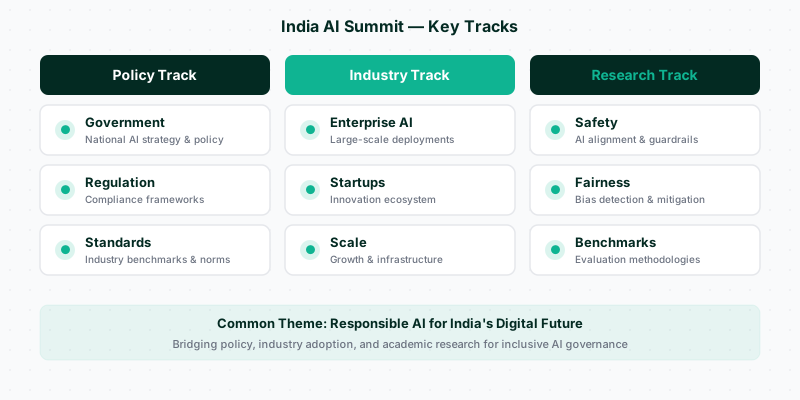
The India AI Impact Summit 2026 took place in New Delhi from February 16-21, 2026, as a global event focused on artificial intelligence. This was the fourth in a series of worldwide AI summits, following events in Paris (2025), Seoul (2024), and Bletchley Park (2023).
Summit Framework
The summit operated around three main pillars called "Sutras" (Sanskrit for guiding principles):
- People
- Planet
- Progress
These were supported by seven collaborative focus areas ("Chakras"):
- Human Capital
- Inclusion for Social Empowerment
- Safe and Trusted AI
- Resilience, Innovation, and Efficiency
- Science
- Democratizing AI Resources
- AI for Economic Growth and Social Good
RAIL's Participation
Responsible AI Labs (RAIL) demonstrated how "AI systems can be evaluated, monitored, and governed responsibly." The organization showcased tools for both technical and non-technical users.
Non-Technical Tools
- RAIL Score Evaluator
- Protected Generator
- Compliance Tester
- RAIA (Responsible AI Assistant)
Developer Tools
Python SDK integration with OpenAI, Anthropic, and Google Gemini support enabled programmatic evaluation across eight safety dimensions.
Key Insights
The summit revealed that safety concerns transcended organizational levels--from enterprise leaders to students, teachers, and parents all prioritized trustworthy AI systems. RAIL reported 100+ active developers and 5+ enterprise pilots underway before the event.
Looking Forward
The experience underscored that responsible AI cannot remain confined to boardrooms; safety frameworks require broad awareness and practical implementation across society.
The 2026 global AI regulation landscape
A comprehensive overview of AI regulations across the EU, US, India, China, and other major jurisdictions in 2026.
Scaling AI in the enterprise: why responsibility matters more than ever
Why responsible AI practices become critical as organizations scale their AI deployments across the enterprise.